
In this article
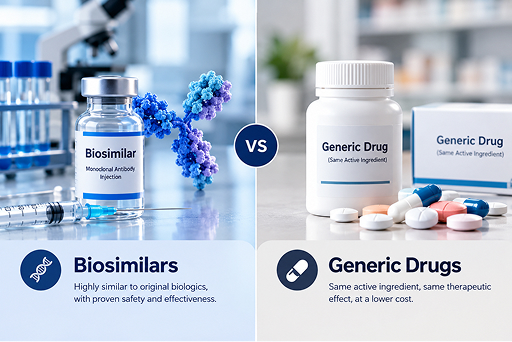
When it comes to pharmaceuticals, terms like biosimilars and generic drugs are often used interchangeably, leading to confusion among patients and healthcare providers alike. However, while both biosimilars and generics offer more affordable alternatives to brand-name drugs, they differ significantly in their composition, development, and regulatory pathways. Understanding these differences is crucial for making informed healthcare decisions.
What Are Generic Drugs?
Generic drugs are exact chemical replicas of brand-name medications. They contain the same active ingredients, dosage form, strength, route of administration, and therapeutic effects as their branded counterparts. Because they are chemically identical, generics are considered bioequivalent, meaning they produce the same effect in the body as the original drug.
Key Characteristics of Generic Drugs:
- Made from small molecules with a simple chemical structure.
- Must demonstrate bioequivalence to the brand-name drug.
- Approved through the Abbreviated New Drug Application (ANDA) process by the FDA or similar regulatory authorities.
- Typically much cheaper than brand-name drugs due to reduced research and development costs.
- Do not require extensive clinical trials, as their efficacy and safety are already established.
What Are Biosimilars?
Biosimilars, on the other hand, are not identical copies but highly similar versions of biologic drugs. Biologics are complex, large-molecule drugs derived from living organisms and are used to treat conditions like cancer, autoimmune diseases, and diabetes. Because of their biological nature, biosimilars cannot be exact replicas but must demonstrate no clinically meaningful differences in terms of safety, purity, and potency compared to the reference biologic.
Key Characteristics of Biosimilars:
- Made from living cells and have complex molecular structures.
- Require extensive comparative studies, including clinical trials, to establish similarity to the reference product.
- Approved through a more rigorous regulatory pathway, such as the Biologics License Application (BLA) under the FDA’s 351(k) pathway or equivalent processes worldwide.
- Though less expensive than biologics, they are generally costlier than generics due to the complexity of development.
- They may have minor differences in formulation but must demonstrate the same therapeutic outcome.
Major Differences Between Biosimilars and Generics
| Feature | Generic Drugs | Biosimilars |
|---|---|---|
| Composition | Small-molecule, chemically synthesized | Large-molecule, biologically derived |
| Exact Copy? | Yes, identical to brand-name drug | No, highly similar but not identical |
| Development Cost | Lower | Higher due to extensive testing |
| Approval Pathway | ANDA (Abbreviated New Drug Application) | BLA (Biologics License Application) |
| Clinical Trials | Not required as their efficacy and safety are already established | Required to demonstrate similarity |
| Price Reduction | Significant | Moderate |
The differences between generics and biosimilars impact availability, affordability, and treatment choices. Generics provide an accessible and cost-effective alternative to chemically synthesized drugs, whereas biosimilars expand treatment options for complex diseases at a lower cost than original biologics. Healthcare professionals must consider these factors when prescribing medications to ensure the best outcomes for patients.
While both biosimilars and generics contribute to making medications more affordable, they differ in fundamental ways due to the nature of their origin. Generic drugs are exact chemical copies of brand-name drugs, whereas biosimilars are highly similar but not identical to biologic drugs. Understanding these differences is essential for patients, healthcare providers, and policymakers in ensuring access to safe, effective, and affordable medications.
Build your career
Train for a clinical research role
Our Advanced Program in Clinical Research & Management covers trial design, GCP, monitoring and data management — with mock interviews.